
Design-Build vs. Traditional Bid Process: Which Is Better for Your Home Remodeling Project?
Planning a major home remodel or custom home is exciting, but one of the first decisions you'll make can have a significant impact on your project's cost, timeline, and overall experience.
Should you choose a design-build firm or follow the traditional design-bid-build process?
While both approaches can produce exceptional homes, they operate very differently. Understanding the advantages and tradeoffs of each can help you choose the process that best fits your goals. Many homeowners choose our Design-Build Services because they allow budgeting and design to evolve together.
For homeowners in Los Gatos, Saratoga, Los Altos, Palo Alto, and throughout Silicon Valley, where projects often involve complex permitting, structural engineering, hillside conditions, and high design expectations, selecting the right project delivery method is especially important.
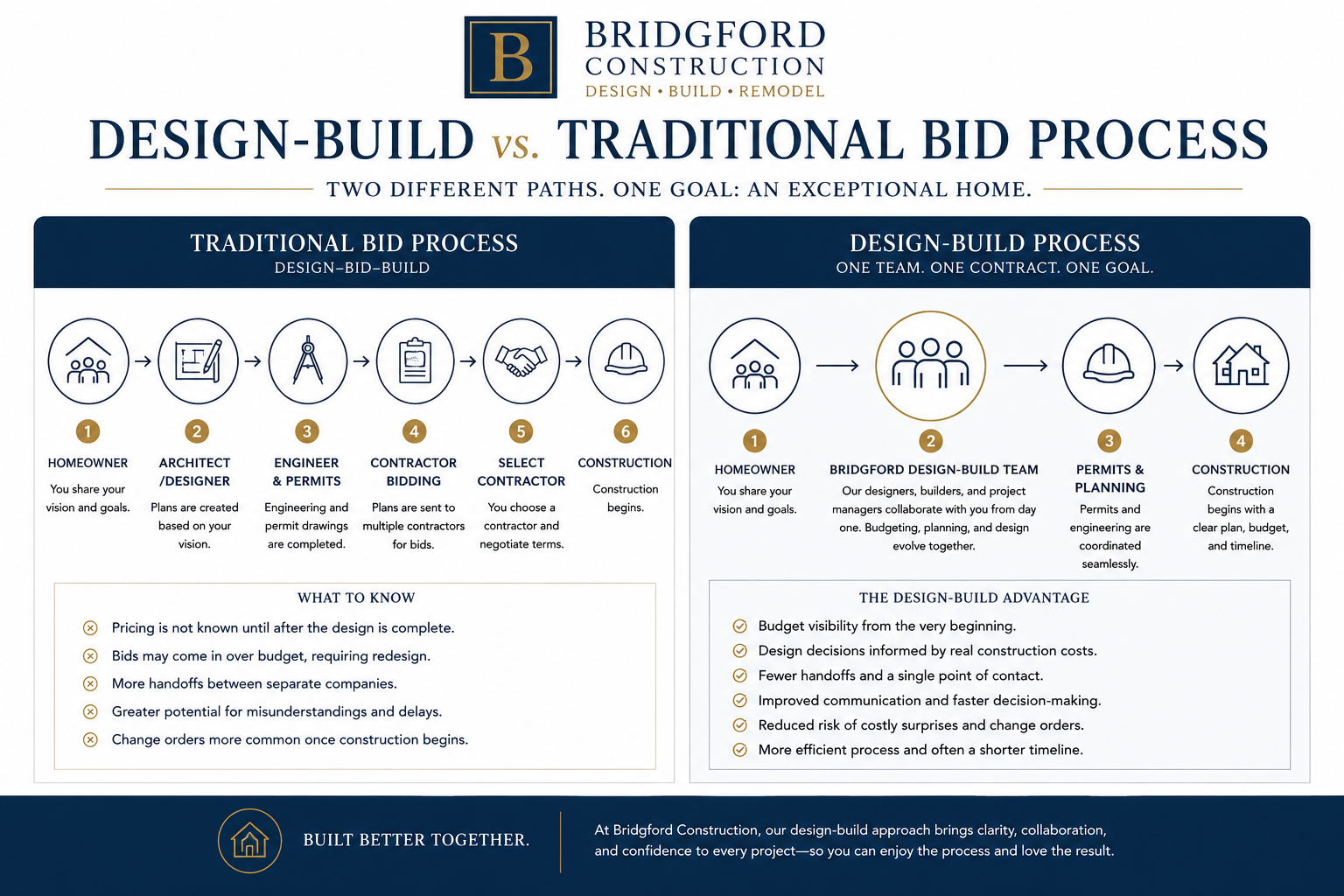
What Is the Traditional Bid Process?
The traditional process—often called Design-Bid-Build—splits the project into separate phases.
Typically, the process looks like this:
Hire an architect or designer.
Complete the construction drawings.
Submit plans for engineering and permits.
Request bids from several contractors.
Select a contractor.
Begin construction.
This method has been the industry standard for decades and works well for many projects.
Advantages
Ability to compare multiple contractor bids.
Architectural plans are completed before selecting a builder.
Owners maintain separate contracts for design and construction.
Potential Challenges
Because the architect and contractor work independently, communication gaps can occur.
Common issues include:
Construction budgets exceeding expectations after design is complete.
Value engineering that requires redesign.
Questions during construction leading to change orders.
Longer project timelines due to multiple handoffs.
These challenges become more common on complex remodels where existing conditions are difficult to predict.
What Is Design-Build?
With the design-build approach, one company manages both the design and construction process under a single team.
Rather than working independently, designers, estimators, project managers, and construction professionals collaborate from the beginning.
Instead of finishing the design before discussing costs, budgeting occurs throughout the design process.
This allows decisions to be made with real construction pricing and scheduling information in mind.
Cost Control
One of the biggest advantages of design-build is budget visibility.
With traditional bidding, homeowners often invest significant time and money developing construction drawings before learning what the project will actually cost.

If bids exceed the budget, revisions may require additional architectural work and delay the project.
In a design-build process, preliminary pricing is typically updated throughout design development.
This allows homeowners to make informed decisions before plans are finalized.
Examples include:
Selecting materials that better fit the budget.
Adjusting project scope early.
Evaluating structural options before engineering is complete.
Prioritizing investments that deliver the greatest value.
Timeline
Time is another area where the two methods differ.
Traditional projects usually move from one professional to the next:
Architect → Engineer → Permits → Bidding → Contractor → Construction
Each transition can create additional waiting periods.
With design-build, many of these activities overlap.
For example, budgeting, engineering coordination, permit preparation, and construction planning often occur simultaneously.
While every project is unique, this integrated approach frequently shortens the overall project schedule.
Communication
Large residential remodels involve dozens of decisions.
Questions arise regarding:
Structural changes
Building code requirements
Mechanical systems
Finish selections
Scheduling
Permit revisions
When multiple companies are involved, homeowners may find themselves coordinating conversations between the architect, engineer, contractor, and consultants.
With design-build, there is generally a single point of contact responsible for coordinating the entire team.
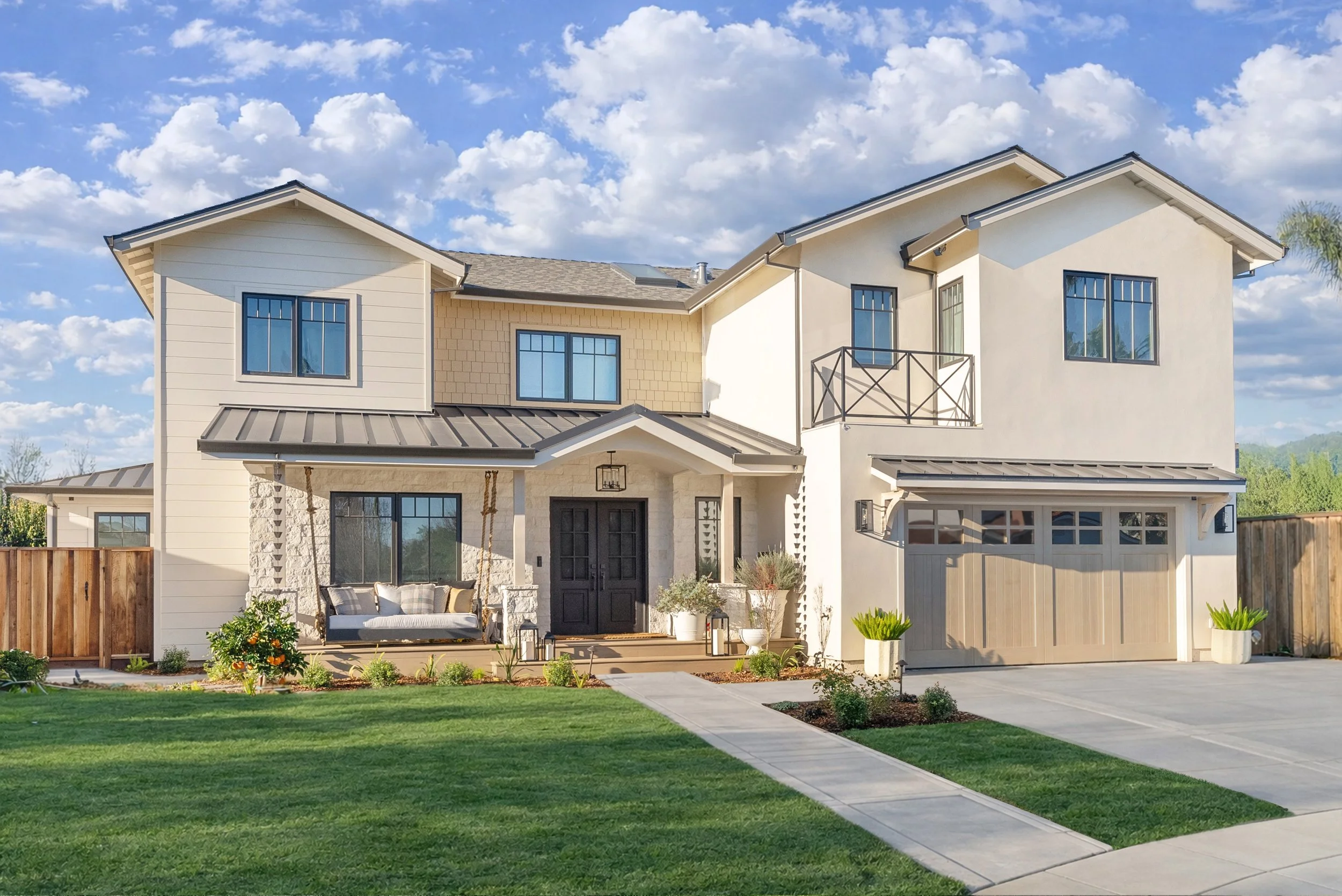
This often results in faster decision-making and fewer misunderstandings.
Which Projects Benefit Most from Design-Build?
While both methods can work well, design-build often provides the greatest value for:
Whole-home remodels
Major additions
Custom homes
ADUs
Homes with structural modifications
Hillside construction
Historic or older homes
Projects with extensive permitting requirements
Many Silicon Valley homes present unique challenges, including aging infrastructure, mature trees, complex zoning regulations, and neighborhood design review requirements.
If you are planning a whole-home remodel in Los Gatos, careful coordination during design can help avoid costly surprises. Early collaboration between design and construction teams can help identify these considerations before they become costly surprises.
When Traditional Bidding May Be the Better Choice
There are situations where the traditional process still makes sense.
Examples include:
You already have completed architectural plans.
You have an established relationship with an architect.
Your design is finalized and you're simply seeking construction pricing.
The project is relatively straightforward.
Many successful projects continue to follow this model.
The key is ensuring strong communication among everyone involved.
Questions to Ask Before Choosing a Process
Regardless of which method you choose, consider asking:
How will the budget be monitored throughout design?
When will I receive updated pricing?
Who coordinates consultants and engineers?
How are change orders handled?
Who communicates with the city during permitting?
Who is responsible for scheduling?
What happens if unexpected conditions are discovered?
The answers often reveal how smoothly the project is likely to proceed.
Which Process Is Right for You?
Neither method is universally better.
The best choice depends on your priorities.
If your primary goal is obtaining completed plans before selecting a contractor, the traditional bid process may fit your needs.
If your priorities include collaboration, proactive budgeting, streamlined communication, and a unified team from concept through construction, the design-build approach often offers significant advantages.
For many homeowners investing in substantial renovations or custom homes, reducing uncertainty and improving coordination can make the entire experience more enjoyable.
Final Thoughts
Building or remodeling a home is one of the largest investments most families will make.
The process you choose can influence not only the final result but also the experience along the way.
Taking time to understand the differences between design-build and traditional bidding helps ensure you're selecting the approach that aligns with your goals, budget, and expectations.
Whether you're planning a custom home, major addition, whole-home remodel, or ADU in Los Gatos, Saratoga, Los Altos, Palo Alto, or elsewhere in Silicon Valley, beginning with a clear understanding of your project delivery method is one of the best investments you can make.